Cultural Etiquette: Do's and Don'ts Around the World
Getting etiquette right abroad isn't about memorizing rules. It's about showing you've made an effort, and avoiding the handful of mistakes that genuinely offend. Customs vary enormously between countries (and within them), so treat the examples below as a starting point, then read up on your specific destination and watch what locals do.
Universal habits that work almost everywhere
- Learn five words: hello, please, thank you, excuse me, and goodbye. A greeting in the local language buys a lot of goodwill.
- Greet before you ask. In many cultures, launching straight into a question without a greeting comes across as rude.
- Dress for the place, not the weather. Cover shoulders and knees at religious sites, and carry a light scarf or sarong.
- Ask before photographing people, especially at ceremonies, markets, and places of worship.
- Be careful with gestures. A thumbs-up, an "OK" sign, or beckoning with a finger can be rude in some countries. An open hand is the safest way to point.
- Follow the lead of your host. When in doubt, wait and copy.
Asia
Japan
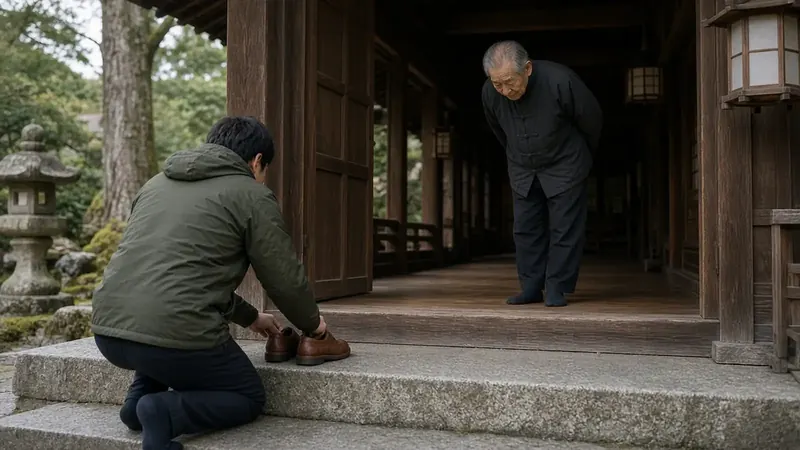
- Do take off your shoes in homes, traditional inns (ryokan), many temples, and anywhere with tatami floors. Look for a step up and a row of slippers at the entrance.
- Do keep your voice down and skip phone calls on trains.
- Don't tip in restaurants or taxis; it isn't expected and can cause confusion.
- Don't stick chopsticks upright in a bowl of rice or pass food chopstick to chopstick; both are associated with funerals.
Thailand
- Do dress modestly at temples (shoulders and knees covered) and remove shoes before entering temple buildings.
- Don't touch anyone's head or point your feet at people or Buddha images.
- Don't joke about or disrespect the monarchy; Thailand's laws on this are strict.
India
- Do use your right hand to eat, pay, and pass things.
- Do remove shoes at temples and in most homes, and cover your head at Sikh gurdwaras (scarves are usually provided).
- Don't expect public displays of affection to go unnoticed, particularly outside big cities.
China, South Korea, and around the region
- Do give and receive business cards and gifts with both hands.
- Do let elders be served first and, in Korea, pour drinks for others rather than yourself.
Europe
- France: say "Bonjour" when you walk into a shop or café and "Au revoir" when you leave. Skipping it is noticed.
- Southern Europe: in Spain, Italy, Portugal, and Greece, friends and acquaintances often greet with a kiss on each cheek; a handshake is fine with strangers. Expect late dinners, especially in Spain.
- Germany, Switzerland, and the Nordics: punctuality matters, and quiet on public transport is the norm.
- Tipping: generally smaller than in the U.S.; rounding up or leaving a modest tip for good service is common, and in some countries service is already included. Check before you go.
Middle East and North Africa
- Do accept tea or coffee when it's offered; hospitality is a big part of the culture.
- Do use your right hand for eating, greeting, and passing items.
- Do dress modestly, especially outside resorts and at mosques, where women may need to cover their hair.
- Don't show the soles of your feet or sit with them pointed at someone.
- During Ramadan, be discreet about eating, drinking, and smoking in public during daylight hours. Rules and expectations vary by country.
Sub-Saharan Africa
Africa is 54 countries and thousands of cultures, so generalizations go only so far. A few habits are widely appreciated:
- Take time over greetings. In many places a proper greeting, asking how someone is and how their family is, comes before any business.
- Dress modestly in rural areas, at religious sites, and in predominantly Muslim regions.
- Ask before taking photos of people, and respect a "no."
- Use your right hand to give and receive in many countries.
The Americas
- United States and Canada: tipping is expected in restaurants, bars, taxis, and for many services, and it makes up a large part of workers' pay. Check current norms for your destination.
- Latin America: greetings are warm (a cheek kiss is common in many countries once you've been introduced), and meals are often social and unhurried. In Brazil, avoid the "OK" hand sign.
- Everywhere: the region is hugely diverse, from Indigenous communities to big multicultural cities, so learn about the specific place you're visiting.
Before you go
- Read your government's travel advice page for the country; it often notes local laws and customs.
- Check the religious calendar for your dates (Ramadan, major festivals, public holidays).
- Pack a scarf or sarong and one modest outfit.
- Save a few phrases offline in a translation app.
The bottom line
Most people are forgiving of visitors who are clearly trying. Greet first, dress for the place, use your right hand when in doubt, ask before you photograph, and follow the locals' lead, and you'll avoid nearly every misstep.