Travel Safety: 12 Practical Ways to Stay Safe on Your Trip
Traveling opens doors to new experiences, cultures, and landscapes, and it also brings a set of risks you don't face at home. The good news is that most problems travelers run into are preventable with a little preparation. Here's a practical guide to staying safe, from the planning stage to the moment you get home.
1. Research your destination
Start with your government's official travel advice for the country (for U.S. citizens, the State Department's travel advisories). They cover crime, local laws, health risks, and areas to avoid, and they're updated when things change. Recent traveler reviews and forums add on-the-ground detail, such as which neighborhoods feel safe at night and common scams.
- Enroll in your government's traveler registration program if it has one (U.S. citizens can use STEP), so the embassy can reach you in an emergency.
- Save the local emergency number and the address of your nearest embassy or consulate.
2. Keep your documents safe
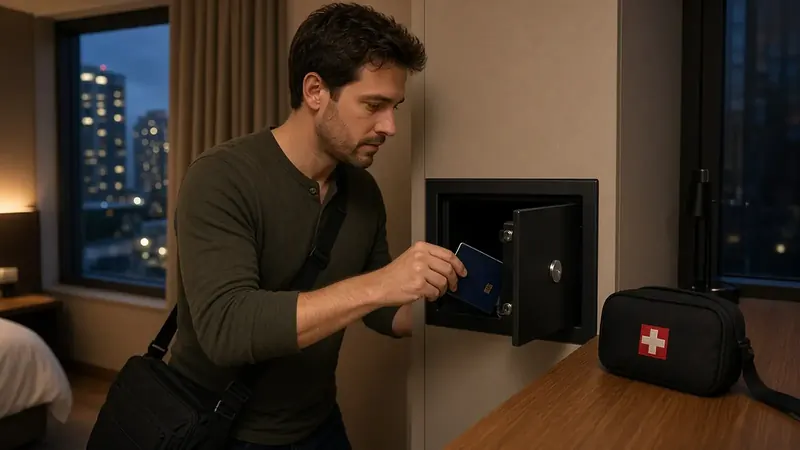
Your passport is your lifeline abroad. Store digital copies of your passport, visas, insurance policy, and bookings in a secure cloud folder, and keep a paper copy separate from the originals. Leave the passport in your hotel safe when you don't need it, unless local law requires you to carry ID; in that case, carry it in a front pocket or under-clothing pouch.
3. Stay connected
Share your itinerary with someone at home and agree on simple check-ins. Get a local SIM or an eSIM data plan so maps, ride apps, and messaging work everywhere, and download offline maps in case you lose signal. A small power bank means your phone won't die when you need it most.
4. Be smart about money
- Carry only the cash you need for the day, and split cards and cash between a couple of places.
- Use ATMs inside banks or busy areas, and cover the keypad.
- Pay in the local currency when a card machine offers you a choice; converting to your home currency at the till usually costs more.
- Set up card alerts and know how to freeze a card from your banking app.
5. Watch for common scams
The details vary by city, but the patterns repeat: the "closed" attraction and a helpful stranger with an alternative, unofficial taxis at airports, a friendly distraction while someone else picks a pocket, and overpriced "free" bracelets or photos. Be polite, firm, and keep walking. Read up on the scams specific to your destination before you go.
6. Prioritize your health
See a doctor or travel clinic a few weeks before you leave to check vaccines and medications. Pack prescriptions in their original containers with a copy of the prescription, plus a small first-aid kit. Be careful with food and water where tap water isn't safe to drink, and use sunscreen and insect repellent.
7. Get travel insurance
Medical care abroad can be very expensive, and many hospitals expect payment up front. A policy with emergency medical and evacuation cover, plus trip cancellation if you've prepaid a lot, is cheap protection compared with the costs it covers. Save the 24/7 assistance number in your phone.
8. Respect local customs and laws
Dressing appropriately and knowing the basics of local etiquette reduce unwanted attention. Laws on things like alcohol, drugs, photography, and public behavior can be far stricter than at home, and penalties can be severe. Not knowing a law is rarely accepted as an excuse.
9. Use reputable transportation
Use licensed taxis, official airport transfers, or ride-hailing apps that show the driver and vehicle. Check the license plate and driver before you get in, and share your trip with a friend. If you rent a car or scooter, make sure your license and insurance are valid for it.
10. Secure your accommodation
- Choose places with recent, consistent reviews that mention safety and location.
- Lock doors and windows, use the safe, and don't open the door to unexpected visitors without checking with reception.
- Note the emergency exits when you arrive.
11. Protect your digital life
Turn on two-factor authentication for email, banking, and travel accounts. Avoid logging in to sensitive accounts on public Wi-Fi unless you use a trusted VPN, and don't post your real-time location or the dates your home is empty.
12. Trust your instincts
If something feels off, it probably is. Leave, change plans, or ask for help in a shop, hotel, or restaurant. Safety always comes first, even if it means missing something on your list.
Conclusion
Being prepared is your best defense. Check official advice, protect your documents and money, stay connected, get insured, and stay alert, and you can focus on the trip itself. A Travel Report puts the destination-specific pieces in one place for your dates: crime and safety notes, health information, pharmacy and embassy locations, and transit.